
Find People in the Kitsap County Residents Directory
Start with the record type, not a broad name search. An address points first to the Kitsap County Assessor Parcel Details system. A deed party belongs in the Auditor's recording index. A court matter requires choosing District, Superior, or a municipal court before searching. A family-history question may start at Kitsap Regional Library or the State Library rather than a current county portal.
Official rolls describe different groups and events. A taxpayer field may identify the person receiving an assessment notice, while a deed identifies parties to a recorded transfer. VoteWA is a private self-service profile for a registrant, not a public resident roll. Many occupants will never appear in an address-keyed public source, so a missing name is not evidence that the person did not live in Kitsap County.
- Search Parcel Details by an address, parcel number, or tax account and save the exact identifier.
- Open the Parcel Search Map when location, layers, nearby parcels, or sales history would clarify the result.
- Use the Auditor recording database to test names, document types, dates, and the recorded deed chain.
- For older people, compare State Library directories, library microfilm, census releases, and local archives.
- Ask the correct custodian for a copy or file a focused Public Records Act request when the record is not online.
Offices Behind the Kitsap County Residents Directory
Three offices form the core source map. The Auditor records deeds, liens, plats, surveys, and other instruments. The Assessor maintains tax and parcel information while warning that taxpayer-of-record data does not itself establish ownership. Kitsap Elections handles registration services and regulated voter-data orders. The full address workflow belongs in the Kitsap County street directory; this office map helps choose the right first door.
Kitsap County Auditor, Recording Division
614 Division St MS-31
Port Orchard, WA 98366
360-337-4935
Kitsap County Assessor
614 Division St MS-22
Port Orchard, WA 98366
360-337-7160
Kitsap County Elections
619 Division St
Port Orchard, WA 98366
360-337-7128
Parcel Details in the Kitsap County Residents Directory
The Assessor's search is often the fastest way to turn a Kitsap address into a stable parcel or tax-account number. Its current interface accepts parcel or tax account data and an address. That makes it useful for distinguishing similar street names, checking the site-address form, and carrying a parcel identifier into map, permit, and recording systems.
| Search clue | What it helps locate | How to use the result |
|---|---|---|
| Parcel or tax account | One assessed property record | Preserve it as the cross-system key |
| Site address | The parcel tied to the physical location | Compare spelling and number with GIS |
| Taxpayer information | The assessment account contact | Do not treat it as proof of title |
| Sales history link | Recorded transaction leads | Confirm instruments in the Auditor index |
The county's Property Ownership guidance makes the key distinction: a taxpayer listing is an assessment record, while ownership is established through a recorded deed. A careful residents directory preserves that difference instead of turning the quickest hit into an unsupported conclusion.
The Parcel Details source shown here is the current public entry point for that first lookup.
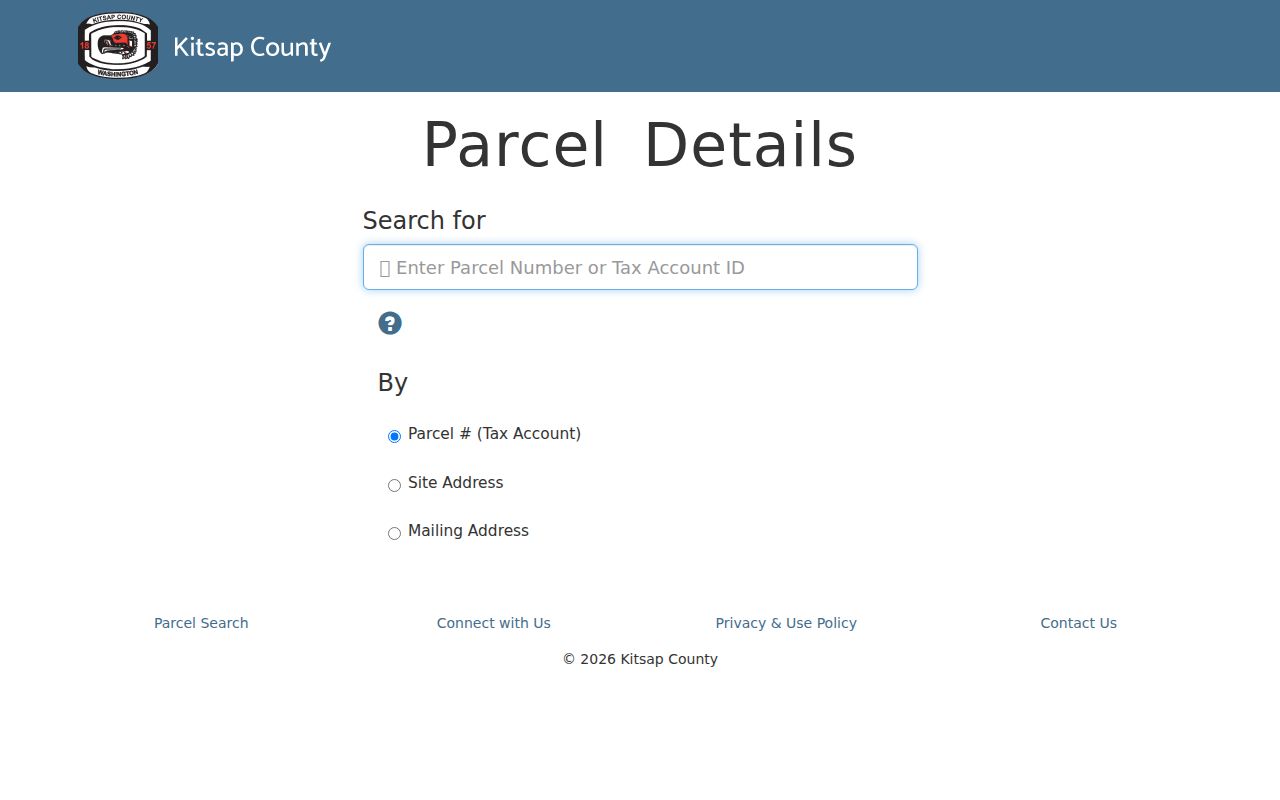
The screen demonstrates why an exact parcel or account number is more reliable than carrying a loosely formatted address between systems.
Map Clues for the Kitsap County Residents Directory
The Kitsap County Parcel Search Map accepts Parcel No, Site Address, Mail Address, and Taxpayer searches. It can display layers, measure, select parcels, print a map, and switch selected records into a table. Result links connect a parcel to tax detail, sales history, splits and merges, and DCD permit information.
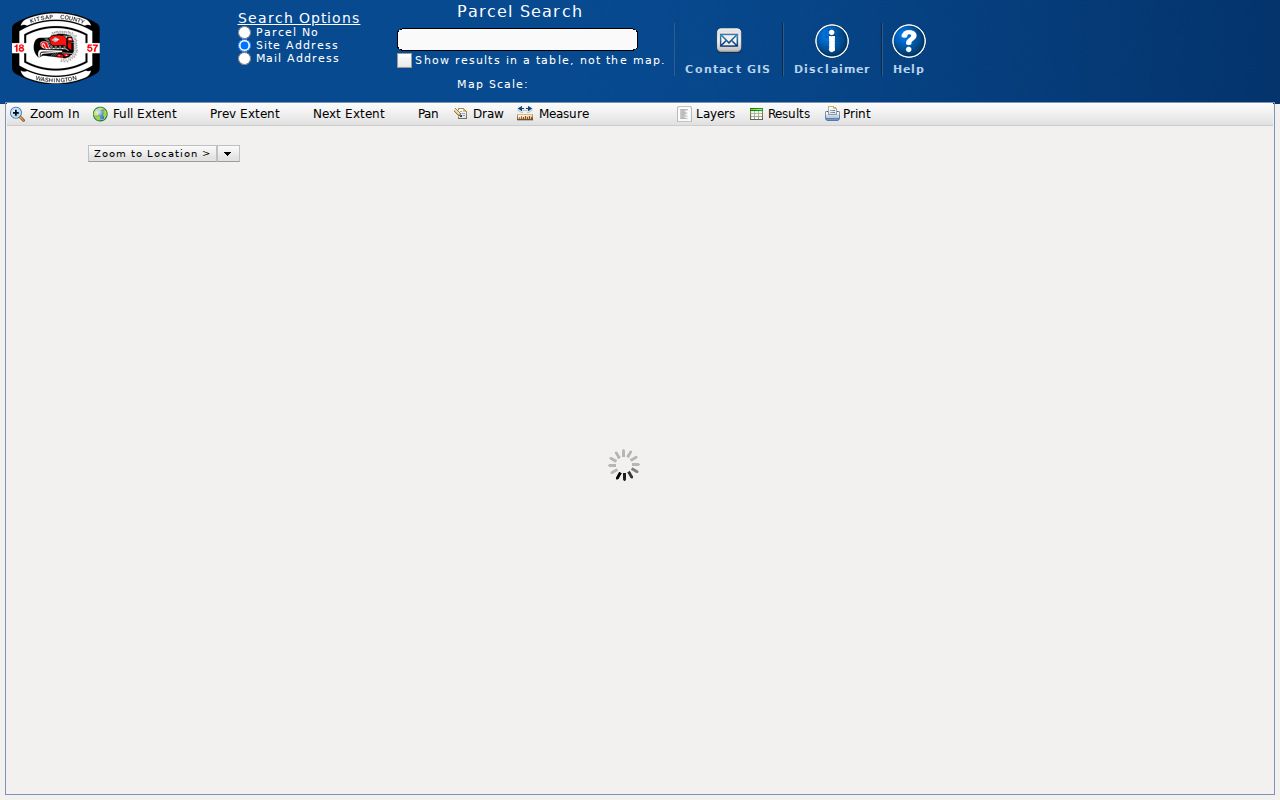
Those tools add geographic and parcel-evolution context, but the map does not prove that a named person occupies a home. It may carry one address for a parcel that has several, and its boundary lines are not survey evidence.
Current Kitsap County Residents Directory Sources
No current roll includes every Kitsap County resident. Property systems organize parcels and assessment contacts. Recording indexes organize parties to documents. Court systems organize cases. Voter services are split between personal VoteWA profiles and voter-data reports that require an affidavit and carry statutory use limits. Select the roll whose reason for collecting the name matches the question.
| Source | Who It Lists | Keeper | Access |
|---|---|---|---|
| Parcel and tax roll | Taxpayer record tied to a parcel | Kitsap County Assessor | Free public portal |
| VoteWA profile | The registrant using the service | Washington Secretary of State | Personal sign-in |
| Voter-data report | Fields allowed by Washington law | Kitsap County Elections | Affidavit and order |
| Recording index | Parties named on recorded instruments | Kitsap County Auditor | Online index; copies by request |
| Court indexes | Parties connected to filed cases | District Court or County Clerk | Portal, archive, or copy route |
A one-name inquiry needs careful identity matching across these rolls. A Kitsap County resident lookup should separate people with similar names and record only what each source actually confirms.
VoteWA and the Kitsap County Residents Directory
VoteWA asks for first name, last name, date of birth, and a verification step so a registered voter can reach a personal profile. It should not be presented as a public tool for typing another person's name. Kitsap Elections offers a different route for orderable voter data, governed by RCW 29A.08.720 and a signed noncommercial-use affidavit.
The county's order guidance describes registered-voter, voting-record, and district report choices. It states that electronic delivery has no fee, paper costs $0.15 per page plus postage, and fulfillment may take up to three days. Phone and email are confidential. The documented channels include email, in-person, and fax ordering, not merely an online portal.
Auditor Index Clues for Kitsap County Residents
The Kitsap County Auditor's recording database indexes grantors, grantees, document types, dates, record numbers, and legal descriptions for recorded material. A hit establishes that a name was indexed as a party to an instrument. It does not automatically establish current residence, occupancy, or even the person's role beyond the document.
The Recording Division page links the public database and copy request form. When an image is missing or the online result is unclear, the form supports searches by grantor or grantee, document type, year, record number, section, township and range, or plat name. Requests can be mailed or handled with the office, so the public login is only one access channel.
The public recording login shown here is useful for index discovery before a copy request.
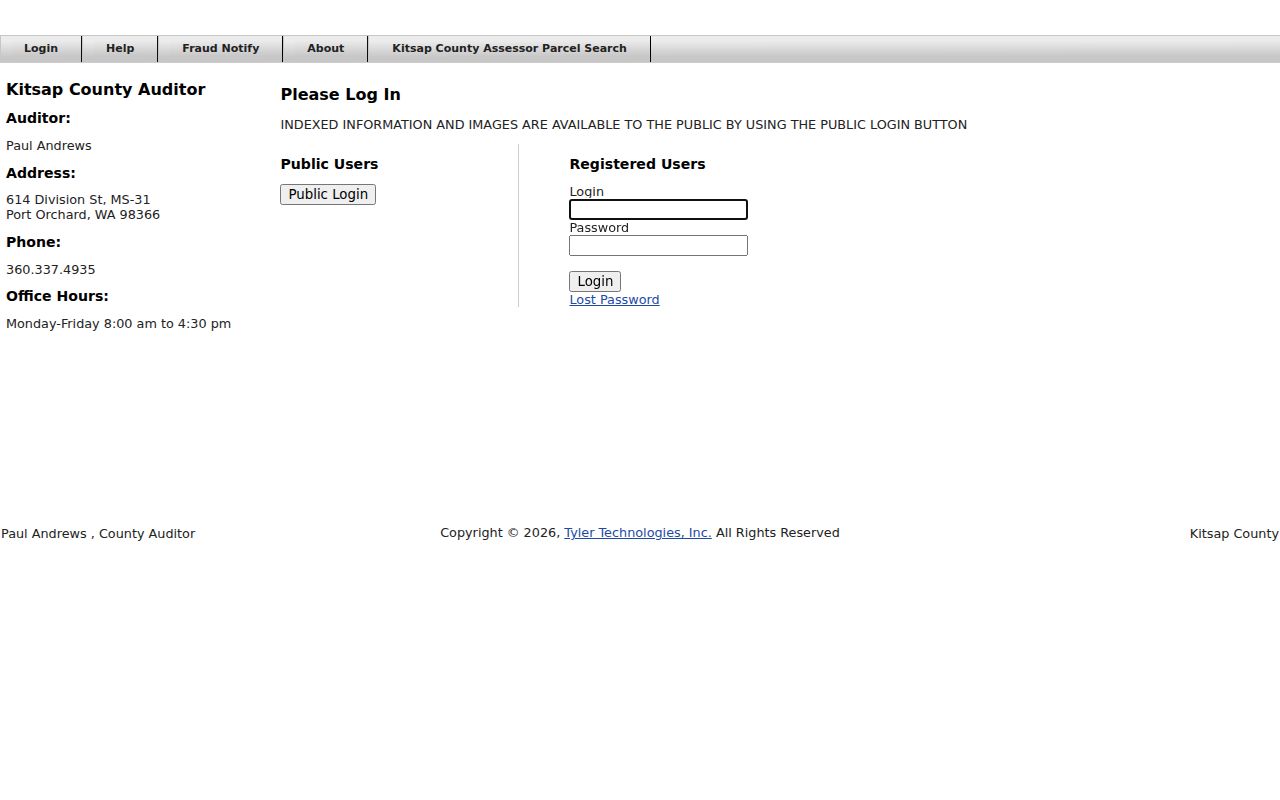
Record the instrument number and document date from a result because those identifiers survive name variations better than a screenshot alone.
Port Orchard Anchors the County Source Map
Port Orchard is the county seat and the physical center for the Auditor, Assessor, Elections office, County Clerk, and other county records functions. Yet a mailing place, municipal boundary, county service area, tribal area, and familiar community name can describe the same part of Kitsap in different ways. Bremerton, Bainbridge Island, Poulsbo, Port Orchard, and unincorporated communities also maintain or generate their own records.
That geography affects a search. A Bremerton code or police record routes to city offices, while an unincorporated development record routes to Kitsap County DCD. The county GIS bookmarks places such as Hansville, Kingston, Manchester, Silverdale, Suquamish, and Port Gamble, but those bookmarks are navigation aids rather than formal resident lists or proof of neighborhood membership.
Kitsap County Residents Directory Request Gaps
Kitsap County's public-records hub routes requests through GovQA and explains copy fees, exclusions, and the initial response process under the Washington Public Records Act, RCW 42.56. The county targets an initial response within five business days. That response may provide records, estimate more time, ask for clarification, or cite an applicable exemption.
A focused request names the department, record type, date range, address or parcel, known parties, and desired format. Court records follow their own court and clerk routes, and DCD has a dedicated request procedure for permits, plans, code material, and land-use files. Calling the responsible office before filing can resolve a portal question without launching an overly broad request.
Development records need especially clear routing. DCD describes separate paths for electronic material, archived permit files, code-enforcement records, and records that require staff retrieval. A useful address request includes the full site address, parcel number, permit or project number when known, the type of document sought, and a realistic date span. If the property falls inside a city, check that city's clerk or department rather than assuming the county holds the file.
Court copies do not belong in GovQA. Kitsap District Court has an ePortal that requires registration for public electronic file viewing. Superior Court users follow the Kitsap County Clerk's copy guidance, Washington Digital Archives, or Odyssey instructions according to the record and user type. The statewide name search can help identify a case, but exclusions and delayed entries mean the case number and local court file remain the better verification path.
Online access, an office counter, telephone guidance, mail forms, archives, and a formal request are complementary channels. A complete Kitsap County residents directory guide presents all of them because older images and non-digital series may not appear in a web index.
Historical Kitsap County Resident Directories
Historical research uses a different set of doors. The Washington State Library lists Kitsap County directories and Bremerton-area city directories, including reverse or criss-cross volumes from 1979 through 1996 and Bremerton-area runs reaching 2009. Kitsap Regional Library supports genealogy work with newspapers, obituary help, local microfilm, and branch access. The Puget Sound Regional Branch and Washington Digital Archives add county, school, court, probate, and recording series.
A city directory entry may show a name, spouse, occupation, or street address as printed for that edition. It is a dated clue, not an evergreen statement. The full year runs, abbreviation methods, and citation workflow are covered in the Kitsap County city directory guide.
Kitsap's Archive Trail Reaches Beyond Directories
The State Archives catalog lists a Kitsap general recordings index for 1888 through 1977, chattel-mortgage indexes for 1878 through 1967, conditional-sales indexes for 1893 through 1967, and school district registers and censuses covering 1890 through 1939. These series can place a person in a transaction, school, or court context that current portals do not contain.
The Kitsap History Museum offers an archival catalog, research help, and reproduction services. Poulsbo Historical Society describes street-sorted house binders and a 1933 sewer utility map. Federal census releases move to NARA after 72 years. Access can require a catalog search, staff request, scheduled visit, research fee, or reproduction charge, so record the collection, series, box or page, and access date.
Physical access also changes. Research notes recorded a Washington State Library closure notice effective July 1, 2025, so anyone planning to consult the county and city directory lists should confirm appointment and staff-access conditions before travel. The Puget Sound Regional Branch remains the main archival node for Kitsap county-origin records, while Digital Archives supplies online indexes or images for selected series. A catalog description is not the record itself; request and cite the underlying item.
The Kitsap Regional Library genealogy collection shown here is a practical local starting point when a historical name or obituary is known.
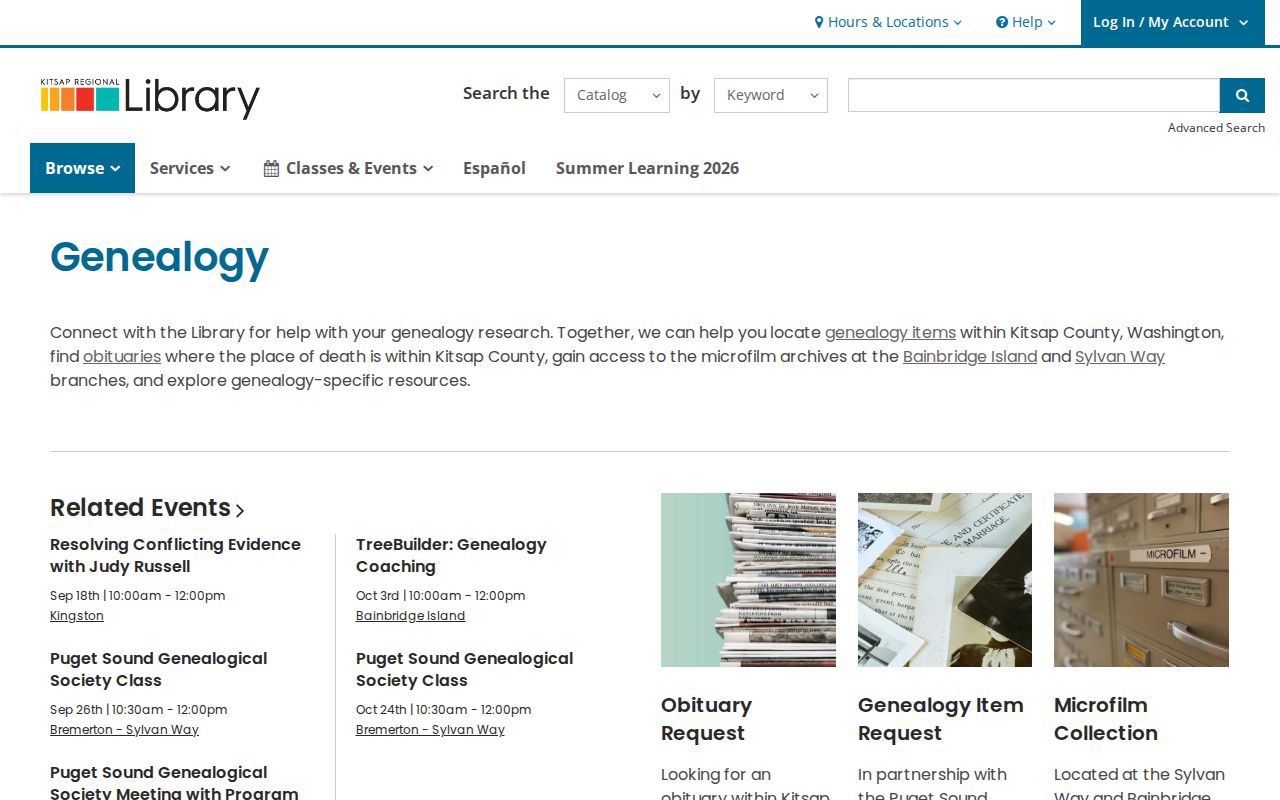
Library staff and microfilm provide the fallback when a directory or newspaper issue has not been digitized.
Verify Kitsap County Residents Directory Findings
A useful research packet keeps the query, source URL, access date, portal mode, identifier, date span, and a short statement of what the record proves. It also gives each proposed person-to-address link a confidence label. Exact parcel, instrument, case, or certificate numbers deserve more weight than a name alone.
Confirm a current parcel clue against a deed or another official source. Confirm an old directory entry against a released census, obituary, school record, map, or dated recording. When a source returns nothing, write that the item was “not located in the searched official source” and state the date, fields, known coverage, and next custodian. A no-result may reflect spelling, migration, restricted access, an old address, or a portal gap.
Name variants deserve their own log. Keep exact spellings, initials, prior surnames only when a source supplies them, trust or estate forms, and business names in separate rows. Do not silently combine them. For addresses, preserve unit numbers, directional prefixes, road suffixes, mailing versus site fields, and any county address-correction date. These small distinctions prevent two people or two parcels from being collapsed into one apparent match.
Official source trail
Shows the record's custodian, date, fields, limits, and a stable identifier that can be checked again.
Commercial people-search category
May merge old or unrelated data, hide provenance, charge for incomplete results, and should never replace custodian verification.
Protected Addresses Stay Outside the Directory
Washington's Address Confidentiality Program supplies a substitute address and protects an enrolled participant's actual location in covered records. Vital records, adoption material, juvenile matters, sealed cases, and some personal data have separate access rules. A public index result never cancels those limits.
The safest practice is to publish the minimum needed for a lawful family-history, estate, reunion, consumer-safety, or civic purpose. Keep dates and record identifiers with the work, omit private contact fields, and return to the custodian when a correction or restricted-record question appears. That discipline makes a Kitsap County residents directory more accurate and less likely to harm the people described.