
Kitsap County Previous Residents Sources
Each era leaves a different kind of address evidence. Current parcel details provide a starting identifier. Recorded instruments can extend the ownership chain. Directories, released census pages, newspapers, schools, and local archives may then identify former occupants rather than only people named in land records. Choose the row nearest the date being studied, and always retain its edition, page, instrument, sheet, or archive series.
| Source | Years It Covers | Where Held | What It Shows |
|---|---|---|---|
| Auditor recordings | Online range not stated | Kitsap County Auditor | Recorded parties, dates, legal descriptions |
| General recordings index | 1888-1977 | Puget Sound Regional Branch | Older index route and recording references |
| Reverse directories | 1979-1996 | Library of Congress listing | Bremerton-area addresses arranged in reverse |
| Kitsap and Bremerton directories | Listed runs, 1882-2009 | State Library and KRL | Printed names and addresses by edition |
| Federal census | Public through 1950 | NARA and library resources | Households with sheet and line context |
| Local history files | Varies by collection | KRL, museum, Poulsbo society | Obituaries, maps, school and house material |
For a modern date, begin with the parcel and deed. For a late twentieth-century Bremerton-area question, add a reverse directory. For earlier periods, a city or county directory followed by the nearest released census is more useful. Archive coverage is not one seamless run. Gaps are normal, and the source date limits every conclusion.
Start a Kitsap County Previous Residents Trail
Set a last verified address and date before searching backward. Enter the street name in Kitsap Parcel Details, then save the account number, site address, mailing address, taxpayer field, and map pin. Open Sales History and Splits & Merges in the Parcel Search Map. A parent parcel or former identifier may be the bridge to an older deed.
The map's table view is especially useful. It lets a researcher compare selected lots and keep parcel IDs in rows. Yet the Assessor's taxpayer is an assessment field, not proof of title. That distinction protects the past-resident trail from a common error. Retrieve the recorded instrument before describing a transfer, then seek dated household evidence before describing occupancy.
Review the official Kitsap parcel map as the first visual crosswalk.
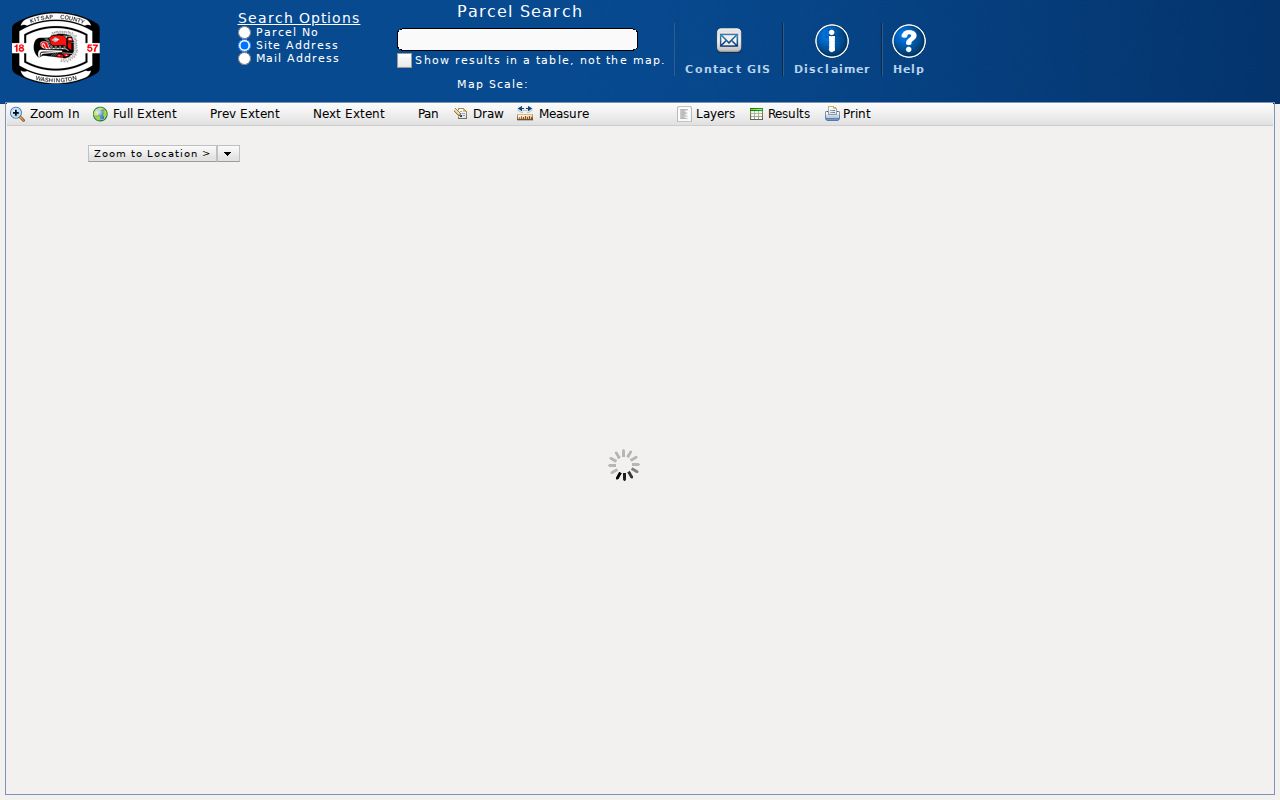
The map ties today's address to parcel identifiers that can survive into sales, split, merge, permit, and recording records.
Trace Kitsap County Previous Residents and Owners
A deed chain works backward through recorded events. Begin with the most recent deed, not merely the current taxpayer label. Keep the legal description because it often remains useful when a road name, house number, or parcel identifier changes. The Auditor's portal does not state its earliest indexed year, so never invent an online cutoff.
- Copy the current parcel number, sales entry, taxpayer, and legal description from the Assessor and GIS.
- Search the Kitsap Auditor index for the purchase deed. Save the instrument number, date, type, grantor, grantee, and image status.
- Search the seller as a grantee to find an earlier purchase. Test trust, estate, business, and source-supplied name variants when needed.
- Follow prior-instrument, plat, legal-description, split, and merge references. Repeat only when each link is supported.
- For a missing year or image, use the Auditor copy form, call the Recording Division, or ask the Puget Sound Regional Branch about its indexes.
- Grantor and grantee
- The grantor transfers an interest; the grantee receives it in the recorded event.
- Chain of title
- The supported sequence of recorded transfers and other instruments affecting the land.
- Legal description
- The formal land description used in recorded documents, often more stable than a street label.
- Criss-cross directory
- A printed directory arranged by address or phone number rather than only by surname.
The Auditor Recording Division also links its rules, copy request, and search. The form accepts grantor or grantee, document type, year range, record number, plat name, and section, township, and range. That broad fallback can recover a previous-resident lead when a street search fails.
The recording portal shows the online entry point for this chain.
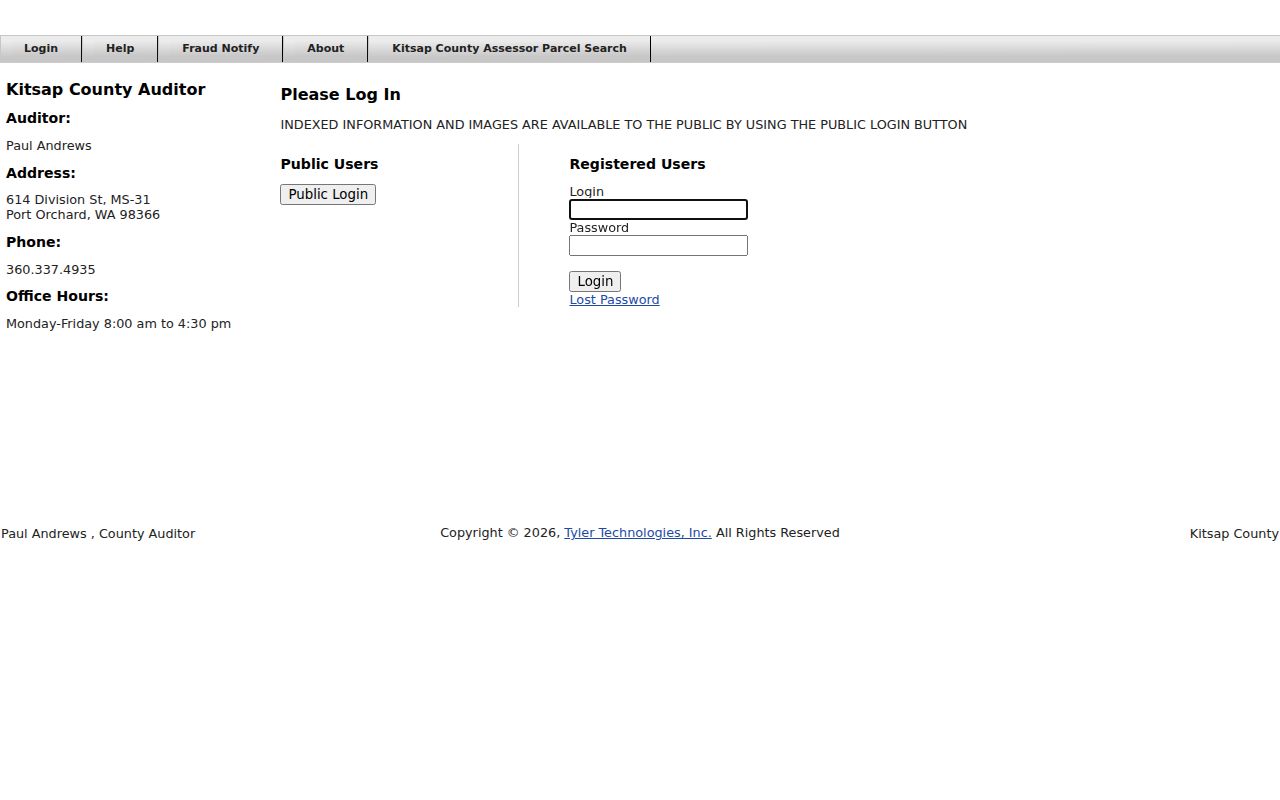
The portal is an index and image route, while the office and copy form remain necessary fallbacks for material it does not expose.
Kitsap County Previous Residents Before the Portal
The Puget Sound Regional Branch lists a Kitsap general recordings index from 1888 through 1977. It also identifies chattel-mortgage indexes from 1878 through 1967 and conditional-sales indexes from 1893 through 1967. These series can reveal a person or business link absent from a modern parcel search, but each result must carry its archive series and record reference.
Archive access is a handoff, not a backup guess. Search the Washington State Archives catalog by keyword and branch, then confirm whether the series is digitized, available by staff request, or requires an appointment. Index entries should be labeled as indexed leads until the image or underlying file is reviewed. Poor microfilm can also make a negative result uncertain.
Port Orchard's role as county seat helps explain why current Auditor and Clerk routes converge there, while older county-origin series may now sit at the regional branch. The custody history belongs in the citation because format and keeper changed over time.
Match Kitsap County Previous Residents to Old Addresses
Address corrections can change a Kitsap road name or number sequence while the parcel remains legally the same. Preserve the old and new labels, notice effective date, parcel number, road history, and any recording reference. If Parcel Details returns nothing, remove the house number and search the street alone. Then inspect plats, legal descriptions, prior parcel IDs, and DCD address records.
Site and mailing addresses must stay separate. USPS confirms a current delivery label, not who occupied the place in a past year. Postal cities can also differ from municipal limits and county service areas. Use the exact label printed by each source rather than rewriting old evidence to match today's address.
The Kitsap address-correction route gives these changes a formal source.
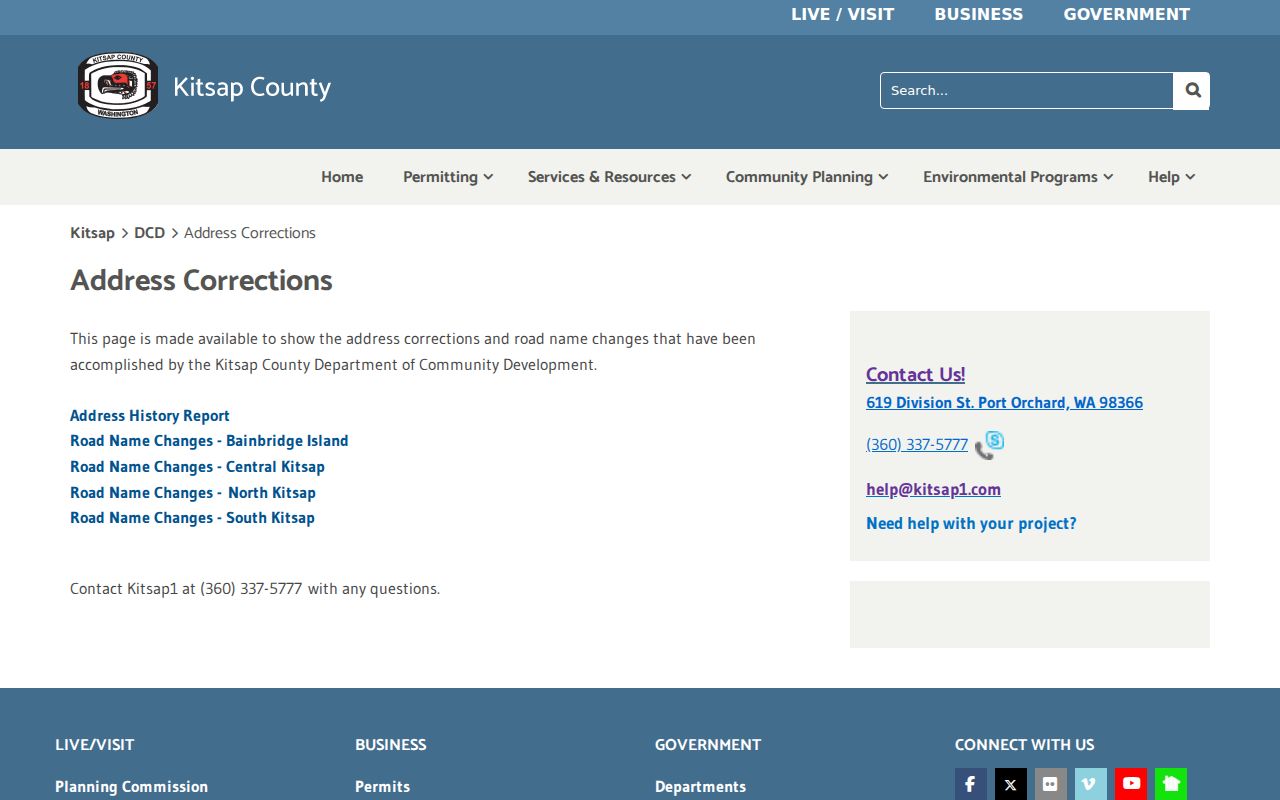
A dated correction notice can anchor the point where searches must switch between two street labels.
Note: State that a result was not located in the searched source on a date, then list the spelling and next custodian.
Kitsap County Previous Residents Household Evidence
Owners are only one part of a household story. The State Library lists Kitsap county directories for distinct runs beginning in 1882, and Bremerton-area runs continue through 2009. The Library of Congress identifies Bremerton and vicinity reverse directories from 1979 through 1996. Check the Kitsap County city directories resource for the collection details, then cite the exact edition and page used.
Released federal census records currently reach 1950 under the 72-year rule. A census image can supply the address, people in the household, age, relationship, birthplace, and other responses. Preserve the enumeration district, sheet, line, and household context. An enumeration district is the geographic area assigned to a census taker. It helps distinguish two people with the same name.
- Find a directory entry nearest the target year and record the printed name, address, edition, and page.
- Locate the closest released census schedule. Match the street and household rather than relying on the name alone.
- Compare the people, ages, relationships, and neighboring entries. Mark any conflict instead of forcing a match.
- Add a deed, school, cemetery, newspaper, obituary, or archive item dated near the same period.
An obituary can connect relatives and places near the end of a person's trail. Probate journals, wills, and letters at the State Archives may help with an estate question. These are endpoints to test, not permission to merge similar names. Former occupants should be described only when the evidence places them at the address or within a well-supported household.
Lawful use. Research a Kitsap County address for house history, family history, estate work, or personal curiosity. Never use a result to track, stalk, harass, or harm a living person.
Poulsbo Streets Keep Extra Clues
Poulsbo Historical Society describes house binders sorted by street name, a 1933 sewer utility map available on a computer, plat maps, North Kitsap Herald files, cemetery material, school attendance books from 1898 through 1970 with gaps, and yearbooks. For a Poulsbo address, the binder and utility map can supply an old label or date before the trail returns to county deeds and plats.
This is a strong local shortcut, but it is not proof by itself. Copy the binder title, page, map label, file name, or other item ID. Then compare that lead with a recorded legal description, directory page, census sheet, newspaper date, or school record. A transcription and an original image should also be labeled differently.
Kitsap Regional Library adds microfilm, obituary help, and a genealogy center. The Kitsap History Museum holds more than 40,000 photographs, negatives, and slides plus maps, books, yearbooks, and records. Its research service begins with a free assessment, while later research and high-resolution images may carry fees and do not guarantee a result.
The Kitsap History Museum research archive shows the visual and documentary collection available for address leads.
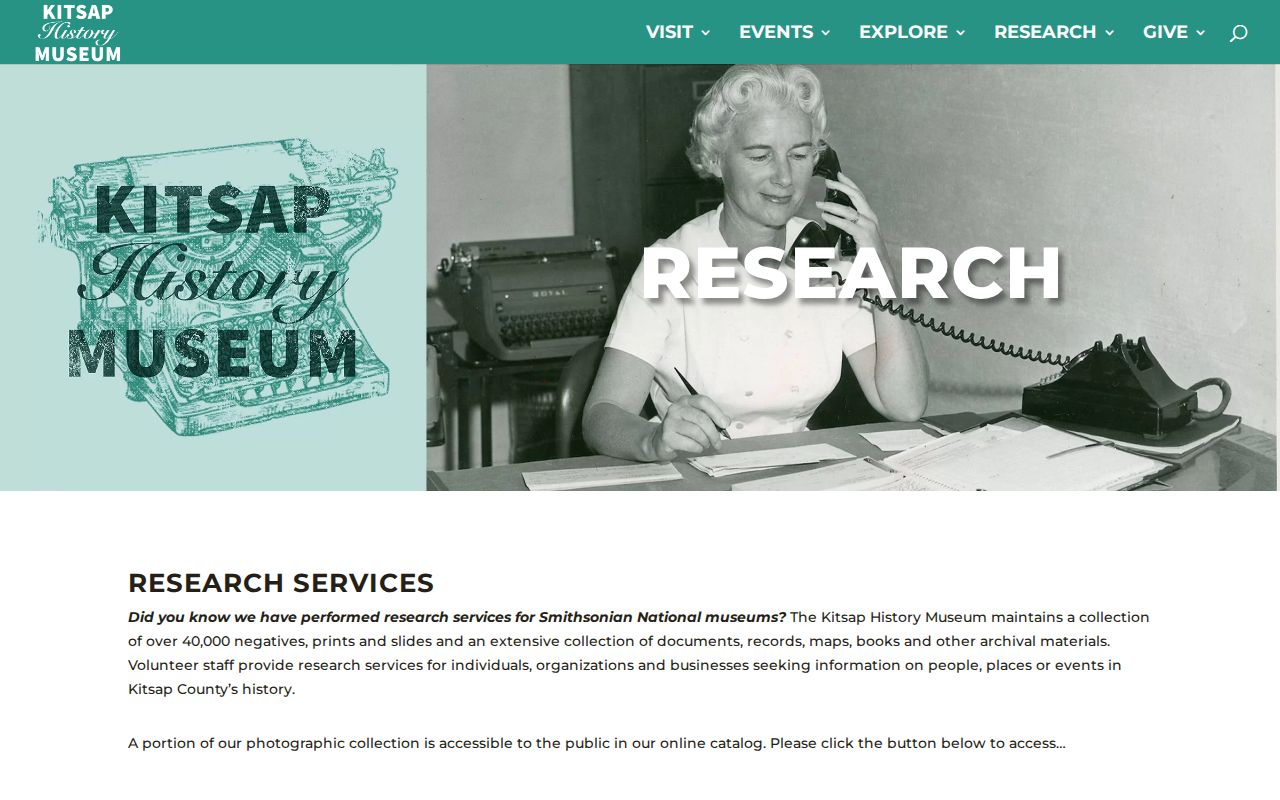
A photo caption can suggest a date or place, but it should be verified against a map, directory, deed, or newspaper before it enters the address chain.
Label Kitsap Resident Findings
A previous-resident file is clearer when every item carries a confidence label. Use “Direct” when an official source displays the relevant identifier and field. Use “Indexed” when the index hit exists but the image was not reviewed. “Corroborated” means two independent sources agree on the name, place, and date. “Context” covers a map or area source that does not identify the person.
Mark a lead “Unresolved” when identifiers conflict or remain too thin. Use “Restricted” when a record may exist but access is blocked by a seal, statute, privacy rule, or custodian decision. This language matters for censuses not yet public, protected addresses, sealed files, and incomplete portal coverage. It prevents a blank screen from becoming the false claim that no record exists.
The best Kitsap County address-history conclusion uses two time-aligned sources, including one that specifically places the person at the address or in the household. A deed party is not automatically an occupant. A directory can contain an error. A map proves geography, not identity. Keep the claim as narrow as the evidence.